National Advisory Council
Working Group on Denotified and Nomadic Tribes
Draft Recommendations of the Working Group
1. Background
1.1 Close to 200 communities, mostly nomadic, were notified by the British government as “criminal tribes” through a notorious piece of legislation called the Criminal Tribes Act, 1871 The rationale behind the Act was the European view that all gypsies are criminals, and following that logic, all Indian nomadic communities were also believed to be potential criminals. For this reason, there is a large overlap between communities that were declared criminal tribes and those that were nomadic. The Criminal Tribes Act, 1871 identified the following six categories as belonging to „criminal tribes‟:
i. Petty traders who used to carry their merchandise on the back of animals and supplied villages with varied items like salt, forest produce, etc.
ii. Communities that entertained the public through performing arts. Among these were musicians, dancers, singers, storytellers, acrobats, gymnasts, puppeteers and tightrope walkers.
iii. Communities that entertained the public with the help of performing animals such as bears, monkeys, snakes, owls, birds, etc.
iv. Pastoral groups, and the hunting, gathering, shifting cultivator communities within forests that traded not just in forest produce, but in animals as well. They were also herders, and traded in meat or milk products with outlying villagers.
v. Artisan communities that worked with bamboo, iron, clay etc. and made and repaired a variety of useful articles, implements and artifacts. They traded or sold them to settled villagers.
vi. Nomadic individuals who subsisted on charity, or were paid in kind for „spiritual‟ services rendered to traditional Indian society. Such sadhus, fakirs, religious mendicants, fortune tellers, genealogists and traditional faith healers had a low but legitimate place in the social hierarchy of settled people. Some carried medicinal herbs and provided healing services as well.
1.2 Describing the Criminal Tribes Act, 1871 as a blot on the lawbook of free India, Pandit Jawaharlal Nehru annulled it after Independence. As a consequence, these communities were „denotified‟, and hence are now referred to as „denotified tribes‟.
1.3 There has been no census of the “Denotified and Nomadic Tribes” (DNTs) of India though their numbers run into millions. They are found in almost all the states, and belong mostly to the OBC category in some large states. They are also spread across the SC and ST categories in others. Some communities are not covered by any of the three SC, ST and OBC categories. Even those covered under the three categories are often not able to avail of the benefits because of either not having caste certificates, or because the quotas are exhausted by the non-nomadic/non-denotified communities in the reserved categories. Moreover, a number of states have not prepared lists of either the denotified or nomadic communities, and the status of such people is unknown. As a result, DNTs are among the most underprivileged and destitute communities today.
1.4 The Ministry of Social Justice and Empowerment (SJE) constituted a National Commission for Denotified, Nomadic and Semi-nomadic Tribes (NCDNT) in November 2003 which was reconstituted in March, 2005. Shri Renke was appointed Chairman in February, 2006. The Commission submitted its report in July 2008 and made 76 recommendations that broadly pertain to (i) Amendment to the Constitution (ii) Reservation in Government jobs (iii) Action to be taken by States (iv) Action to be taken by GOI (v) Action to be taken by both GOI and States.
2. National Advisory Council (NAC) Working Group
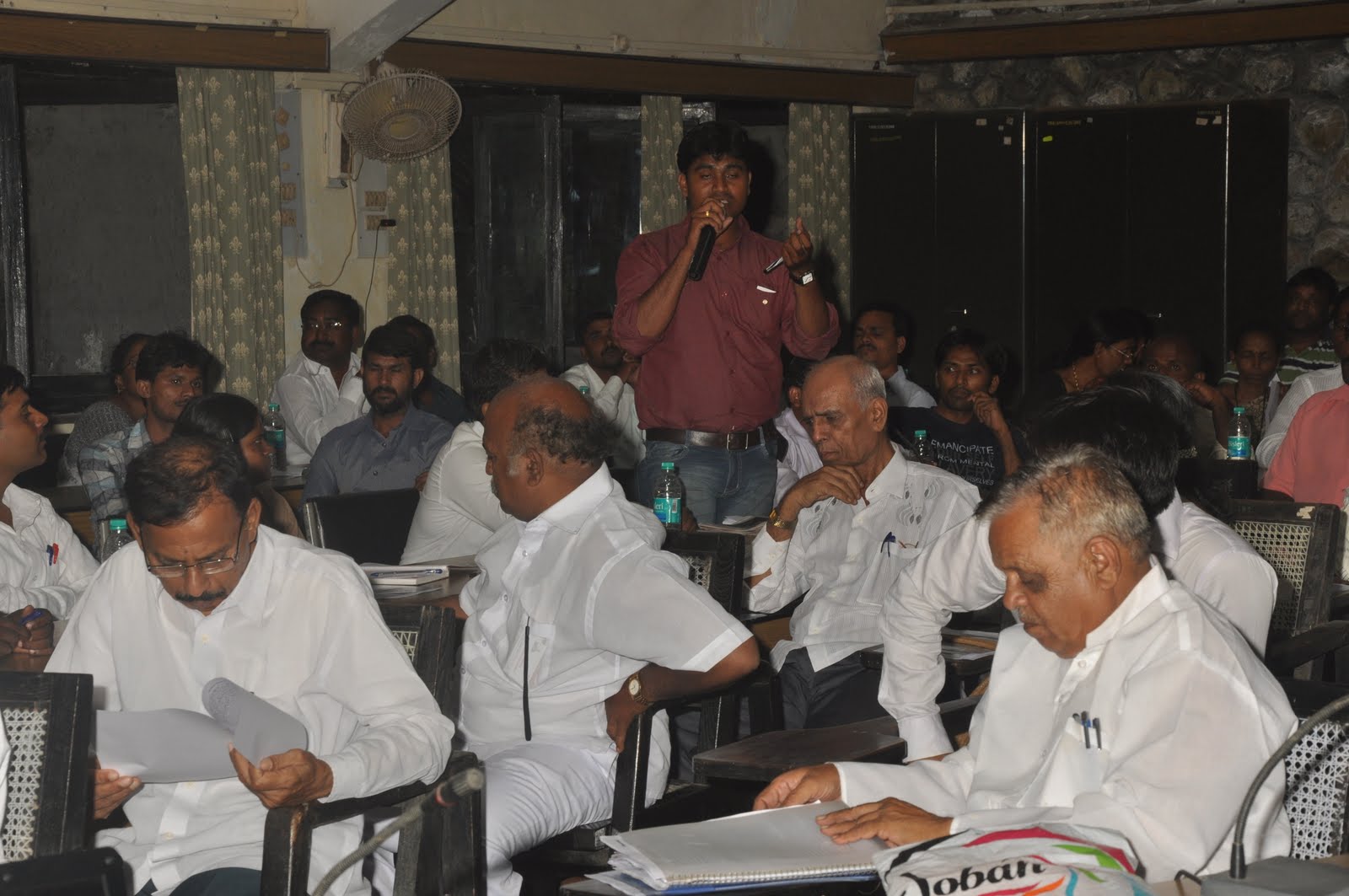
Against this background, a Working Group (WG) was constituted in the NAC to identify some key recommendations to lift DNT communities out of their extremely marginalized socio-economic conditions. The NAC Working Group met three times. Key issues were identified at the first preliminary meeting on 18, April 2011. Subsequently, two national level consultations were held. The first consultation was held on 11 May 2011, attended by the representatives of the erstwhile National Commission for Denotified, Nomadic and Semi-nomadic Tribes, the Technical Advisory Group, and some representatives of NGOs. The second national level consultation, held on July 13, 2011, invited community leaders, Ministry officials, NGO representatives and academic experts. Based on the inputs from the consultations and after due deliberations, the Working Group made the following recommendations. The composition of the NAC Working Group on DNTs, its Terms of Reference and the list of participants who participated at the consultations held by Working Group are at Annexure I to III.
3 The Working Group Draft Recommendations
The Draft Recommendations are organized into five broad categories
1. Legislative action
2. Policy input
3. Institutional arrangements
4. Programmatic/ schematic strengthening and targeting
5. Administrative measures
It is also clarified that these recommendations would need to be implemented by various Ministries of the Government of India and the State Governments.
3.1 Legislative action
a Introduce a new legislation on the lines of the 1992 Statute on Minorities so that the Denotified Communities can be explicitly recognized.
b Introduce a new legislation: similar in scope and spirit to the Scheduled Castes and Scheduled Tribes (Prevention of Atrocities) Act, 1989 in order to deal with different kinds of offences and atrocities against the DNTs.
c Abolish the Habitual Offenders’ Act, 1952. This Act which is similar in spirit to the repealed Criminal Tribes Act of 1871 should be abolished as a first step towards de-criminalisation of DNTs and prevention of atrocities by police.
d Revisit existing Acts: to ensure that the safety and livelihood opportunities of DNT communities are protected and promoted adequately.
The Prevention of Begging Act 1959: Re-examine definitions relating to criminalization of certain categories of DNTs
The Bombay Prevention of Begging Act 1959: Re-examine this and similar laws in urban areas all over the country that target street performing nomadic communities such as acrobats, tight rope walkers, dancers and singers.
Prevention of Cruelty to Animals Act, 1986: Re-examine provisions of this Act that prohibit nomadic communities to engage in street entertainment with the help of animals like bears, monkeys, birds, snakes etc.
Wildlife Protection Act, 1972 and the Forest (Conservation) Act, 1980: Re-examine provisions that have adversely affected forest and DNT communities. Rules prohibiting grazing of cattle; collection of forest produce, fishing in the forest ponds, hunting of small game for their food requirements, growing of staple food through shifting cultivation by nomadic communities need to be reviewed.
Excise laws: Revisit provisions in excise laws that prevent brewing and selling of traditional liquor.
3.2 Policy input
Special DNT sub-plan: A special package and sub-plan is needed for the socio-economic empowerment of the DNTs. The Sub Plan should have due safeguards against diversion or non-utilisation of funds.
3.3 Institutional arrangements
a An empowered Inter-Ministerial Standing Task Force (STF) for DNTs to be chaired by Home Minister be created.
b Grievance redressal and monitoring: A senior officer (serving or retired belonging to the Police or other services) should be designated in every state and made responsible for recording cases of atrocities against DNTs. This Officer should report periodically to the state government as well as to the State or National Human Rights Commission.
c Representation: At least one member in the National Human Rights Commission and the State Human Rights Commission should be drawn from the DNTs.
3.4 Programmatic/ schematic strengthening and targeting
3.4.1 SC/ST/OBCs among DNTs shall receive all benefits for which SC/ST and OBCs are entitled:
All benefits that accrue to SC, ST and OBC communities should be extended to SC/ST and OBCs among DNT communities. More specifically, these would include the following:
DNT students should receive government scholarships and education support
Pre and post-matric scholarships should be provided to DNT children
3.4.2 Expand and improve livelihoods
New programmes and schemes need to designed, and on-going ones strengthened to enable improved livelihoods for DNT communities.
a Design and marketing support for crafts producers:
The KVIC promoted cluster development programmes should consciously include and promote the crafts of the nomadic and denotified communities.
Government agencies that promote cottage and small scale industries be encouraged to design special schemes for DNTs so that the traditional skills of DNTs get further sharpened and expanded to manufacture products for which market demand exists.
b Traditional performers:
Central and state governments, through the Ministry of Tourism, could promote communities engaged in performing arts such as singing, dancing, theatre, playing musical instruments,
Draft Recommendations
4
puppetry etc. The community members can also be employed as guides for tourists inside the forests.
c Forest dependent DNTs
The traditional knowledge of DNTs on flora and plant life in forests can be used for conservation of species. This knowledge can also be used for conservation of forests and collection of minor forest produce by the government.
d Rehabilitation
Alternative viable livelihood options need to be promoted with suitable skill development and training of the younger members of the community. A special programme for rehabilitation of DNTs forced into crimes like brewing illicit liquor could be considered.
3.4.3 Rehabilitation of forest communities
a Steps should be taken to urgently rehabilitate traditional forest based DNTs, 19 of whom were named by the Ministry of Environment and Forests in Revised Guidelines for the Ongoing Centrally Sponsored Scheme Of Project Tiger (dated February, 2008, section 4.6). These are communities involved in traditional hunting, and living around tiger reserves and tiger corridors.” Apart from these 19, many more similar communities exist in forests which should be immediately identified for rehabilitation.
b Strict administrative vigilance should be established to prevent women and girls of these communities falling prey to trafficking, bonded labour and child labour after eviction or displacement from the forests.
c Pastoral DNTs who are evicted on account of preservation of forest or establishment of protected areas and sanctuaries face severe problems for livelihoods. Apart from the rehabilitation provided for hunter-gatherers and shifting cultivator communities, the following special needs should be addressed for pastoral DNTs:
Forest rights of pastoralists like grazing rights and rights concerning water for the animals Sheep, goat and camel should be included in the government‟s “useful animal” list so that the community can draw the benefits attached to husbanding useful animals.
Pastoral DNTs should be encouraged to form their own cooperatives and provided with financial assistance, animal insurance, animal breeding technology, veterinary services, medicines and marketing of animal produce.
3.4.4 Mainstreaming DNTs into on-going programmes & schemes:
a Education: Special efforts should be made to impart education to children of nomadic DNTs through residential schools. Special drive is needed to enrol and retain girl children in schools and hostels. Concessional loans and skill development programmes should be provided for DNTs, through National Scheduled Castes Finance and Development Corporation and National Backward Classes Finance and Development Corporation. NGOs running awareness campaign and vocational training centres for DNTs should be provided with financial assistance.
b Health services: State governments should consider introduction of mobile dispensaries to provide health services to nomadic communities.
c ICDS: Balwadis, anganwadis and creches should be provided on a priority basis for DNT communities.
d Child labour: NCPCR should have a special focus on the children of DNTs who are more prone to child labour.
e Trafficking of women and children: State Commissions on Women should focus on women and girl children of DNTs who are victims of large scale trafficking due to loss of livelihoods. Alternative employment should be provided for such women to make them less vulnerable to trafficking.
f Women and girls: DNT women should be given priority while providing loans, training, asset building, land distribution, etc. Women among DNT communities are economically active and are frequently the only breadwinners for the entire family. Special attention should be paid by MCWD to health, education and protection of the girl child.
g MGNREGA: Concerned panchayats must be made responsible for implementing MGNREGA for the benefit of DNT communities. The requirement for permanent address should be made flexible. Wage employment under MGNREGA should be provided on priority to the homeless. Opening of a bank account or a post office account for disbursement of MGNREGA wages should be made possible even for those with temporary habitations, or for homeless DNTs.
h NRLM: Self-employment for DNTs must be encouraged under the National Rural Livelihoods Mission (NRLM)
i MPLADS: It is recommended that 10% of MPLAD/MLA/MCCLAD funds should be earmarked separately for DNT inhabited areas.
j Old Age Pension: The State Governments should take measures to identify DNTs for assistance under Indira Gandhi National Old Age Pension Scheme.
k Banking Services: Banks and Post Offices should be advised to evolve simple guidelines for opening of DNT bank accounts and give them the benefits of their financial inclusion programmes. Banks need to be advised to earmark an appropriate percentage of priority sector lending for DNTs. The Department of Financial Services should add „DNTs as notified by the State Governments‟ as a distinct category in the list of weaker sections eligible for priority sector lending
3.4.5 Shelter and infrastructure development programmes
a Conduct a nation-wide survey of DNT settlements whether temporary or permanent. This could form the basis for introducing a suitable shelter programme for houseless DNTs.
b Free or subsidized housing may be provided to eligible DNT households in a phased manner – adopting special measures like Rajasthan‟s Gadaria Lohar community housing scheme.
c Given the high incidence of homelessness among DNTs, a proportion of the current outlay for Indira Awaas Yojana could be earmarked for DNTs during the XII. DNTs could be assisted financially to construct dwelling units by receiving priority under the on-going housing programmes of the Central Government
d Homeless nomadic fishing communities could be resettled, as far as possible, close to the dams and reservoirs, so they can continue their traditional occupation.
e An Integrated Infrastructural Development Programme could be specially designed to provide basic amenities such as road, school, electricity, drinking water, community centres, etc. in the existing settlements of nomadic and denotified tribes.
3.5 Administrative Measures
3.5.1 Statutory enumeration of DNTs:
A process for enumeration and classification of DNTs should be established as a first step towards identification of persons belonging to DNT communities. DNTs should be given specialfocus in the caste census as well as priority in the issuing of UID cards. Special directions in this regard need to be issued by the Ministry of Housing and Urban Poverty Alleviation (HUPA) for urban areas and by the Ministry of Rural Development for Rural areas. These include:
a Listings: States unaware of the existence of nomadic communities should refer to the provisional lists of nomadic communities prepared by the National Commission on Denotified and Nomadic Tribes to enable identification of communities. Homeless communities should be particularly included in the caste census. Definition of „residence‟ and „address‟ should be made non-conventional and flexible to include everyone who is physically living in a given area. Pastoral and ex-hunter gatherer communities should receive special attention due to geographical isolation
b Orientation of enumerators: Officials conducting the caste census should be specifically instructed to look for, and visit, the temporary habitations of these communities outside villages and towns. Census officers require suitable orientation and briefing so as not to be influenced by any local prejudices. Enumerators should seek help of local bodies and community leaders from the DNT communities to ensure collection of information. The Ministry of Information and Broadcasting should ensure effective communication for the enumeration of DNTs.
c Issuing caste certificates and other identity cards: The district administration must pro-actively issue caste certificates, birth and death certificates to DNTs in the district. A caste certificate is a pre-requisite if DNTs are to receive, at a minimum, entitlements that SCs, STs or OBCs get. Special drive should be conducted to provide DNTs with Voter Identity Cards, BPL Cards, Ration Cards, MGNREGS Job cards etc., on a campaign mode. During this process, Pastoral and ex-hunter forest communities should be given special attention due to their geographical isolation.
3.5.2 Police sensitization and training:
a Special training of the subordinate staff since the interface of the DNTs is generally with Head Constables and Sub-inspectors.
b Sensitization training modules and workshops at the National Police Academy and Lal Bahadur Shastri Academy
c Engagement of the police in the implementation of development and welfare programmes for DNTs as a way of understanding their vulnerabilities rather than focusing on their criminality.
d Visible and exemplary disciplinary action should be taken against police officials who violate due process of law by detaining members of DNT communities in jail without convictions, torture, extorting bribes and so on.
e Special cells should be set up to enable women of the DNTs to come forward and complain in case of sexual harassment. Strict procedures (like in juvenile courts, presence of a lady constable, etc.) should be followed by the police while dealing with women and children of these communities in police custody
3.5.3 Prevention of Atrocities
A vigorous national campaign is needed to inform the DNT communities about their rights as SC/ST/OBC and to inform the public that violence/discrimination against these communities and violations of their human rights is punishable under law. The campaign could inform the DNT communities about a helpline or an address in each region in case of harassment, discrimination or violence.
Draft Recommendations
7
3.5.4 Forest Rights:
a Forest officials should be sensitised on the unique history, culture and livelihood patterns of the DNTs.
b The rights of nomadic communities who have been relocated from forests should be given land titles while implementing the Scheduled Tribes and Other Traditional Forest Dwellers (Recognition of Forest Rights) Act, 2006
c The law and order machinery should be instructed not to brand DNTs as naxals in the Leftwing Extremist districts (especially in Orissa) because of their earlier „criminal tribe‟ status.
d Strict disciplinary actions be taken against forest officials who harass the ex-hunting communities whenever an endangered animal is poached or found dead.
e Women and girls of DNTs be given special protection from sexual harassment as they work in remote and isolated parts of forests. Action be taken against forest guards and officials who indulge in sexual harassment.
ANNEXURE-I
MEMBERS OF THE WORKING GROUP OF THE NATIONAL ADVISORY COUNCIL ON DENOTIFIED, NOMADIC AND SEMI-NOMADIC TRIBES.
1. Dr. Narendra Jadhav – Convener
2. Shri Madhav Gadgil
3. Shri Harsh Mander
4. Smt. Aruna Roy
Draft Recommendations
9
ANNEXURE-II
TERMS OF REFERENCE (ToR) OF THE WORKING GROUP OF THE NATIONAL ADVISORY COUNCIL ON DENOTIFIED, NOMADIC AND SEMI-NOMADIC TRIBES (DNTs)
The issue of constitutional safeguards and protection to the DNT communities including proper enumeration through Census.
The issues of atrocities and protection from the law enforcement agencies including reconsideration of laws such as the Habitual Offenders Act and other such laws.
Measures for welfare and livelihoods security
ANNEXURE-III
LIST OF PARTICIPANTS
CENTRAL GOVERNMENT
S.No.
Name and designation
1.Dr. Narendra Jadhav, Convener
2.Smt. Sangeeta Gairola, Spl. Secretary, Ministry of Social Justice and Empowerment
3.Shri Kumar Alok, DDG, Unique Identification Authority of India
4.Shri P.P. Mitra, Jt. Secretary, Ministry of Social Justice and Empowerment
5.Dr. Amarjit Singh, Jt. Secretary, Ministry of Human Resources Development
STATE GOVERNMENT
6.Shri Mishri Lal Paswan, Director, Social Welfare, U.P.
7.Shri B.B. Singh, Joint Secretary, Social Welfare, U.P.
8.Shri Vidya Sagar Rao, Principal Secretary, Tribal Welfare, Andhra Pradesh
9.Shri Bijoy Debbarma, Spl. Secretary, Tribal Welfare, Tripura
10.shri R.K. Vaish, Principal Resident Commissioner, Tripura, New Delhi
11.Smt. Aditi Mehta, Pr. Secretary, SJE, Rajasthan
TECHNICAL ADVISORY GROUP
12.Prof. Ajay Dandekar
13.Dr. Meena Radhakrishna
14.Shri Mogili Mallaiah, Sr. DGM, Bharat Heavy Electricals Ltd, Medak District, Andhra Pradesh
15.Shri K. Murali Krishna, Scientist, Acharya N.G. Ranga Agri. University, Hyderabad, Andhra Pradesh
FORMER NATIONAL COMMISSION
16.Shri Balakrishna Sidram Renke, then Chairman
17.
Shri Laxmabhai K. Patni, then Member
18.shri Lakshmi Chand, then Member Secretary
CIVIL SOCIETY
19.Shri Krishna Srinivasan
20.Shri Rinchin
21.Shri Manlik Kaushal
22.Shri Ashok Chowdhury
23.Shri Jaswant Yogi
24.Shri Ram Avtar Bawaria
25.Shri C.K. Yogi
26.Shri Indrajeet Rajbhar, Azamgarh, U.P.
27.Shri Ram Awadh Rajbhar, Azamgarh, U.P.
28.Shri Ram Adhar Rajbhar, Azamgarh, U.P.
29.Shri Zakir Hussain Bajarel, Jammu & Kashmir
30.Mohd. Yaseen Poswal, Jammu & Kashmir
31.Shri Eshfaq-ur-Rehman Poswal, President, Akhil Bhartiya Gurjal Mahasangha (J&K)
32.
Shri Kalu Ram Chauhan, President, Gadia Lohar, Ajmer, Rajasthan
33.Shri Jayantilal Chadawat, President, Sansi Samaj, Ajmer, Rajasthan
34.Shri Gopal Kaishawat (Sansi), Jaipur, Rajasthan
35.Shri Paras Banjara, Chittorgarh, Rajasthan
36.Shri Ummed Singh Rabarik, Jaipur, Rajasthan
37.Ms. Mittal Patel, Vicharata Samuday Samarthan Manch, Ahmedabad
38.Prof. Kanji Patel, President, Denotified, Nomadic Tribes Rights Action Group
39.Shri Laxman Mane, Maharashtra
40.Shri Haribhau Rathod, Ex-MP, Mumbai
41.Shri Laxman Gaikward, Mumbai
42.Shri Ambarsingh Banshi Chavan, Mumbai
43.Shri Anurag Modi, Samajwadi Jan Parishad, Madhya Pradesh
44.Shri Tejpal, Lucknow
45.Shri Nandlal Pal, Lucknow
46.Shri Anil Pal, Lucknow
47.Mrs. Fulaba M. Bhosale, Solapur, Maharashtra
48.Shri Machchindra Bhosale, Mumbai
49.Prof. Mohan D. Chavhan, Nagpur, Maharashtra
50.Ms. Meenakshi Vinay Rai, Chinh International, New Delhi
51.Prof. Motiraj, Banjara Colony, Aurangabad
52.Shri Girish Prabhure, Pune, Maharashtra
53.Shri Paltani Renake, Solapur, Maharashtra
54.Shri Fakira K. Jadhav, Pune, Maharashtra
55.Shri Veeranna Karnavath, Hyderabad, Andhra Pradesh
56.Prof. Kisan Chavan, Maharashtra
57.Shri Vyankappa S. Bhosale, Dalit Mitra, Maharashtra
58.Shri Narayan Jawalikar, Satara, Maharashtra
59.Shri Naranani Banjara, Rajasthan
Posted By
Kalidas Shinde
PhD Scholar
Tata Institute of Social Sciences
Deonar ,Mumbai
Source
nac.nic.in/press_releases/dnt_draft.pdf